Read. Reflect. Realign.
Explore thoughtful guides that weave together Islamic wisdom, psychology, and practical reflection—helping you realign your heart with Allah and your life with purpose.

-
![A minaret against a blue sky with scattered clouds, with Arabic script and a small website URL at the bottom.]()
Patience
Explores the virtue of patience, how to cultivate it and its role in wellbeing according to Imam Al-Ghazali.
-
![Calm ocean with rocky islands and a cloudy sky, taken from a sandy beach.]()
Islamic Meditation
Explore the concept of meditation and a meditative technique outlined by Imam Al-Ghazali in his book ‘The Revival of the Religious Sciences’
-
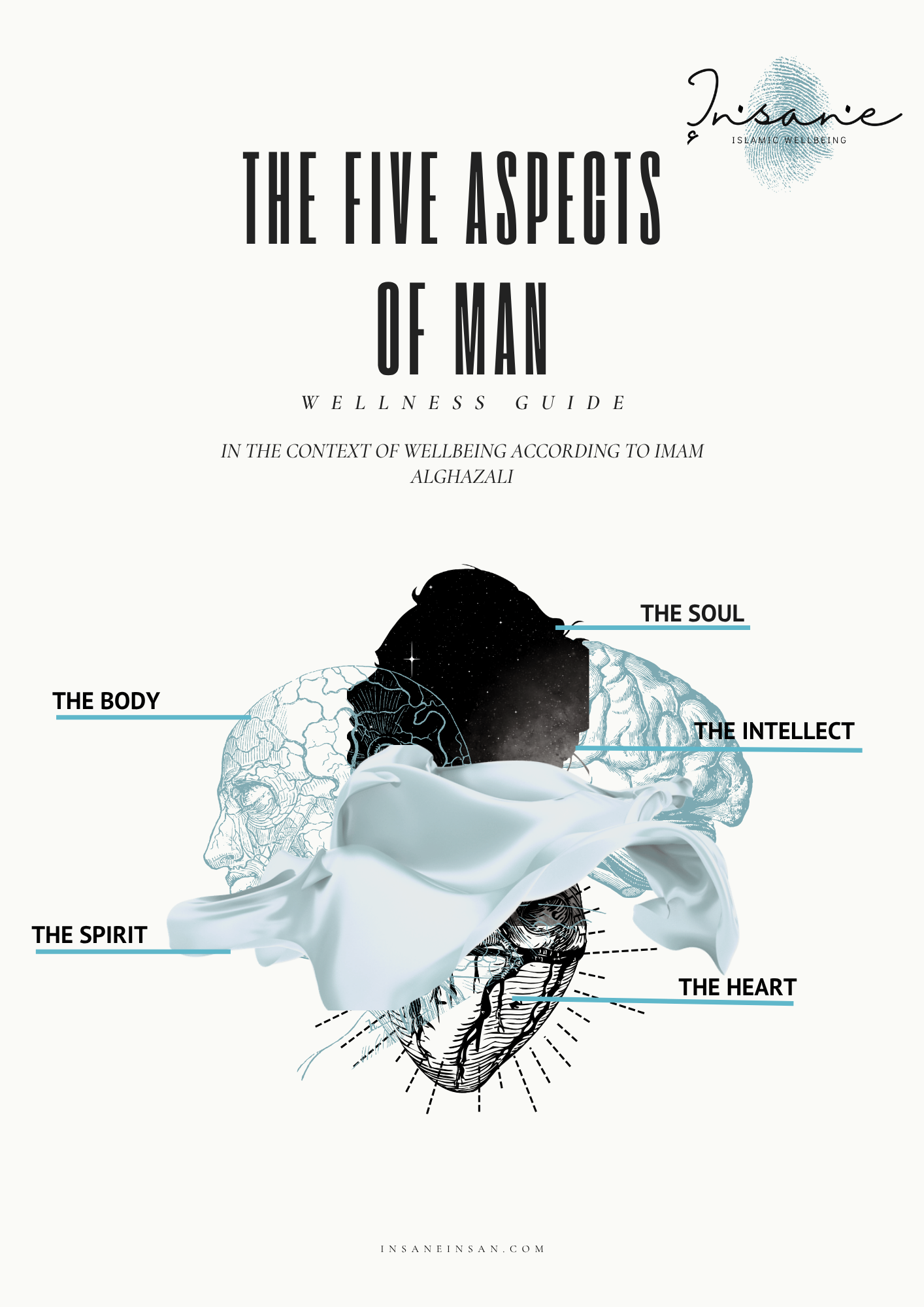
![Diagram of the five aspects of man, including the soul, spirit, heart, mind, and body, overlaid on a stylized illustration of a human heart and brain.]()
The Five Aspects of Man
This guide aims to empower you with Islamic wellness knowledge and to make difficult days more manageable. It will guide you through the five aspects of the human being according to Imam Al-Ghazali’s Al-Ihya (“The Revival”), explaining each from a wellbeing perspective so that you may better understand the causes of suffering and, in turn, how to find relief from it.
-
![Misty foggy landscape with trees and winding road]()
Satan
This guide explores the role of Satan in wellbeing. God warns Mankind of Satan, declaring him as an enemy. Read how he attacks.
-
![Quiet forest scene with tall evergreen trees and misty mountains in the background, promoting wellness and gratitude.]()
Gratitude
Read about what gratitude looks like from an Islamic perspective in relations to wellbeing.
-
![View of a sandy beach with ocean waves washing ashore, and water colors transitioning from green to pinkish hues.]()
Tawakul (Reliance)
This guide demonstrates the importance of cultivating patience for your overall wellbeing.
-
![Snow-capped mountains during sunset with a range of peaks under a pastel sky.]()
Tawhid
This guide shares Imam Al-Ghazali’s understanding of the layers of Tawhid and its relevance to wellbeing
-
![A wellness guide cover titled 'Islamic & Mindfulness' with a minimalist design, featuring a water fingerprint in the top right corner and a gradient blue seascape at the bottom.]()
Islamic Mindfulness
A brief introduction into Mindfulness and the need for it to BE islamic!
-
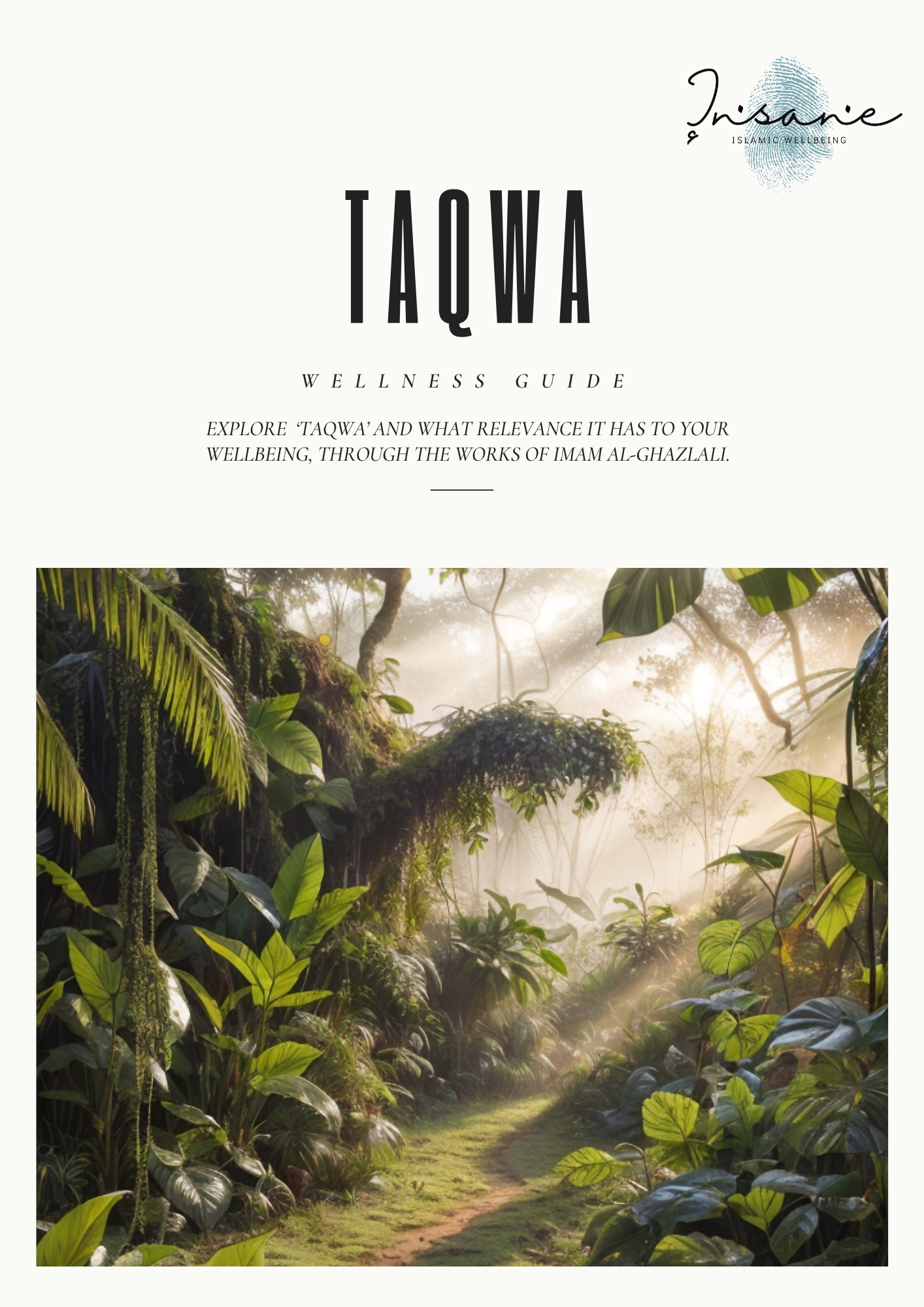
![A lush, green rainforest with tall trees, dense vegetation, and sunlight streaming through the canopy, along a mossy dirt path.]()
Taqwa
Taqwa by far is the concept most similar to contemporary understandings of mindfulness. Find out where islamic understanding diverge from contemporary secular notions and how islam conceptualises taqwa in the context of wellbeing.
-
![]()
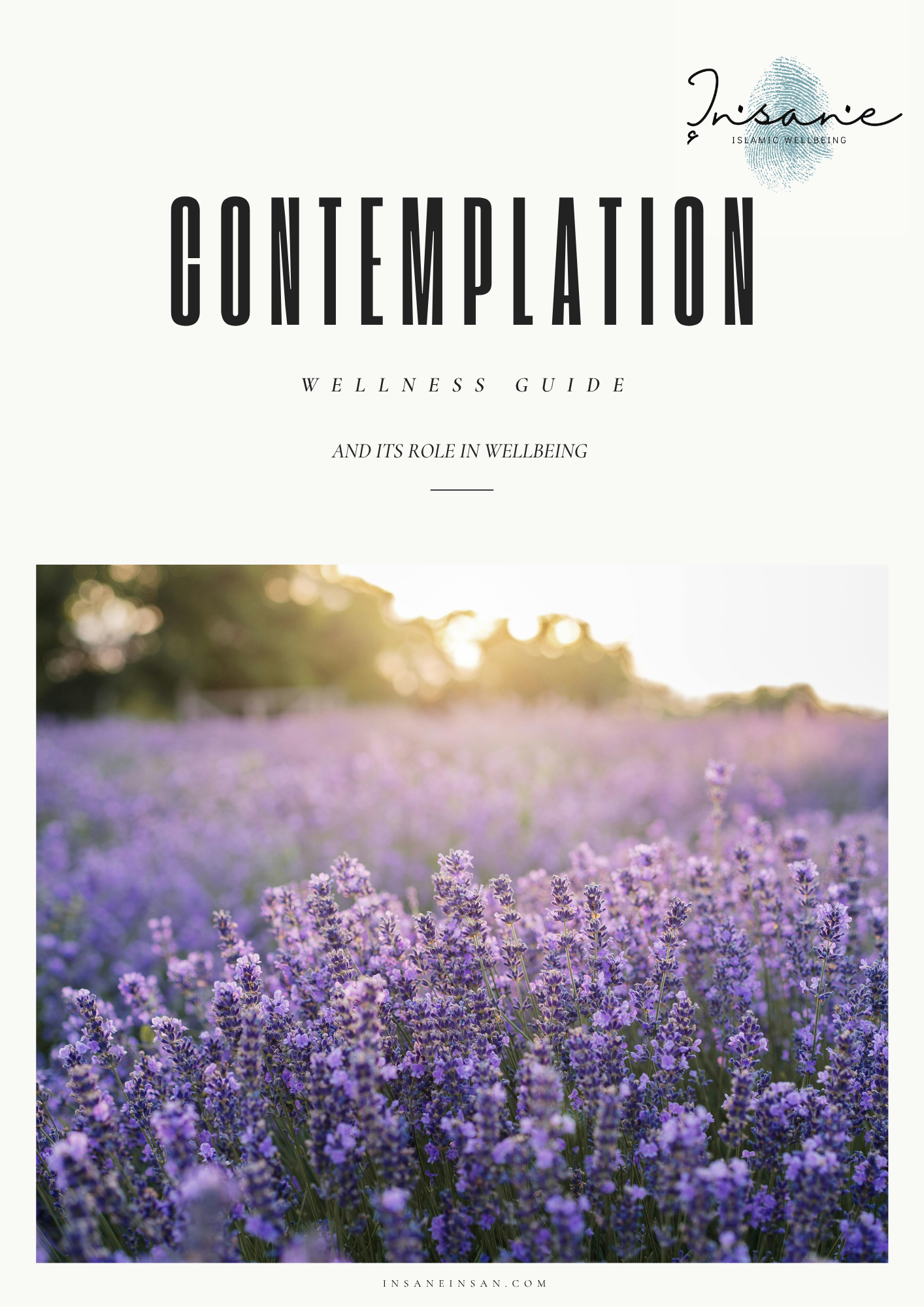
Contemplation
This guide is informed by Abu Hamid al-Ghazali,. His reflections on contemplation (tafakkur) provide much of the framework used here, particularly his understanding of how reflection can deepen awareness of God, encourage personal growth, and contribute to inner peace and wellbeing.
-
![]()
Suffering
This guide explores why we suffer and how the Quran conceptualises suffering.
-
![]()
Human Purpose
Drawing on the teachings of Abu Hamid Al-Ghazali, Islamic wellbeing is rooted in remembering God, fulfilling humanity’s covenant with Him, and living according to one’s purpose as a khalifa (steward) on earth. Through worship, self-discipline, ethical conduct, and service to others, individuals cultivate inner balance, spiritual fulfilment, and collective wellbeing.